Valentin Noujaïm
Out of Time
2026.09.18 – 11.28
La Défense business district, a Parisian showcase for economic and architectural modernity, is the setting for a trilogy of films by Valentin Noujaïm. In Pacific Club (2023), To Exist Under Permanent Suspicion (2024) and Demons to Diamonds (2025), Noujaïm mines this concrete and glass environment, extracting characters who revive the district’s history, the fantasies woven into it, and the ruins that threaten it. Merging documentary and fiction with nods to genre cinema, he composes a bleak, unsettling portrait of the present. Beneath the city surface, underground networks reveal the faults in a system on the brink of collapse.
DORIANE BIOT
Rising at the far end of the historic axis of Paris that connects the Louvre, the Champs-Élysées and the Arc de Triomphe is a cityscape that leans into the future. The Quartier La Défense, in one of the city’s western banlieues, took shape in the 1960s, embodying the ambition of a country racing toward modernity, powered by economic growth, technological innovation and the flow of capital. La Défense, which would become Europe’s leading business district, was built as an architecture of power: an urban territory designed to host the new forms of capitalism. Pivotal to its early development was the construction of a vast slab-like structure informed by Modernist principles. Separating pedestrian areas from vehicular traffic, it replaced the chaos of the city with an orderly vision: urban space organized around predefined functions (work, housing, leisure, mobility), with the flows traversing it managed accordingly. Beneath this vast concrete esplanade, multiple underground levels stretched downward, like negatives of the vertical structures towering at the surface. With the construction of the Grande Arche in 1989, the monumentalization of this new economic power was complete, and La Défense stood as the Parisian epitome of neoliberalism and globalization.
Valentin Noujaïm set his trilogy, comprising Pacific Club (2023), To Exist Under Permanent Suspicion (2024) and Demons to Diamonds (2025), in the heart of this emblematic district, between the triumphant verticality of its monuments and the relegated spaces making up its underside. Each film shifts the framework of the previous one, venturing into new aesthetic territories: documentary portrait, psychological horror, dystopian neo-noir, tragic office movie. By establishing this dialogue between different cinema genres and multiple strata of time, the films construct a space where, amidst the crises of the present, the memories of marginalized communities aggregate. Here, the frictions between documentary and fiction reveal the ghosts that the urban order, in its seeming neutrality, seeks to keep out of sight.
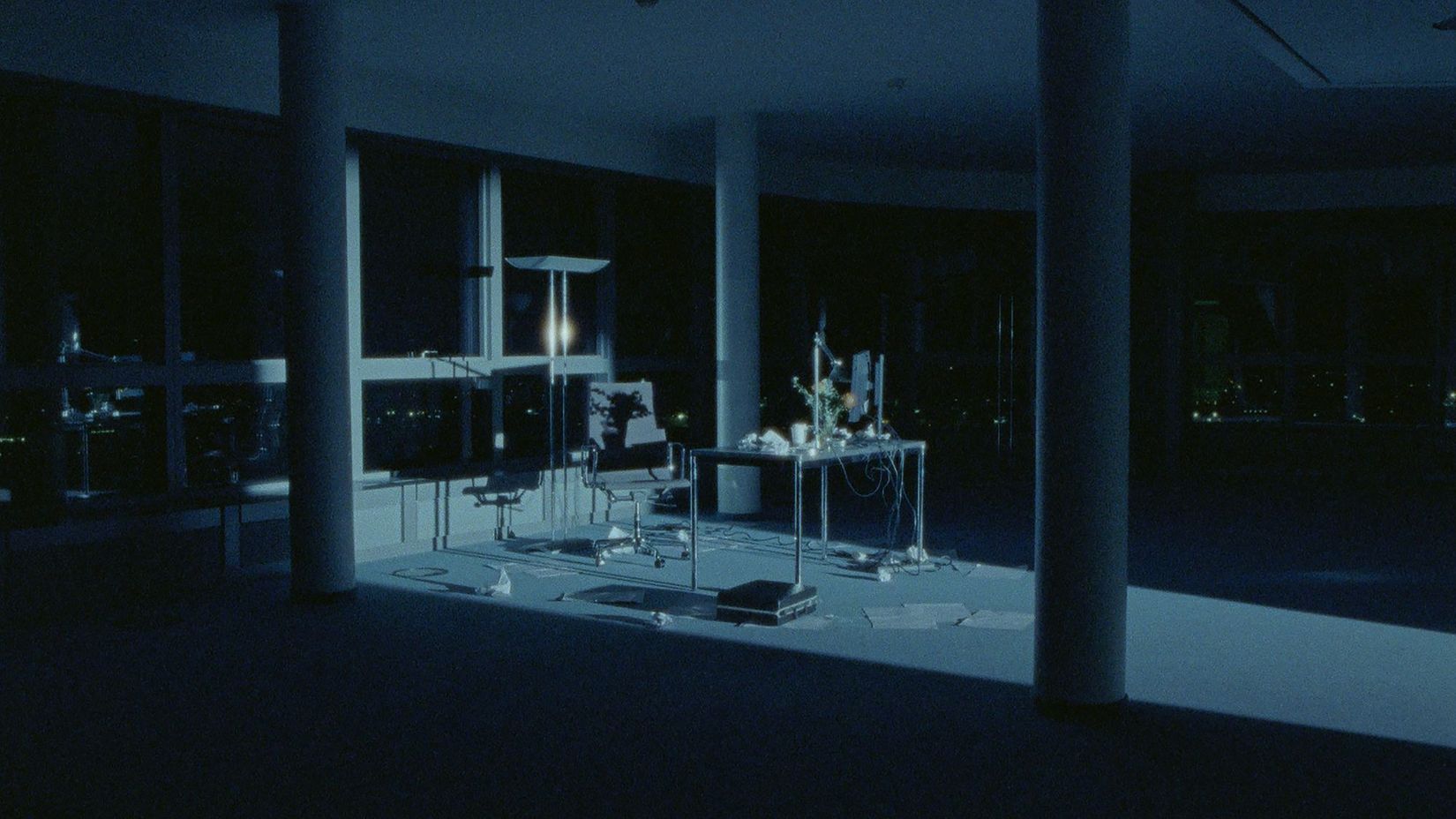
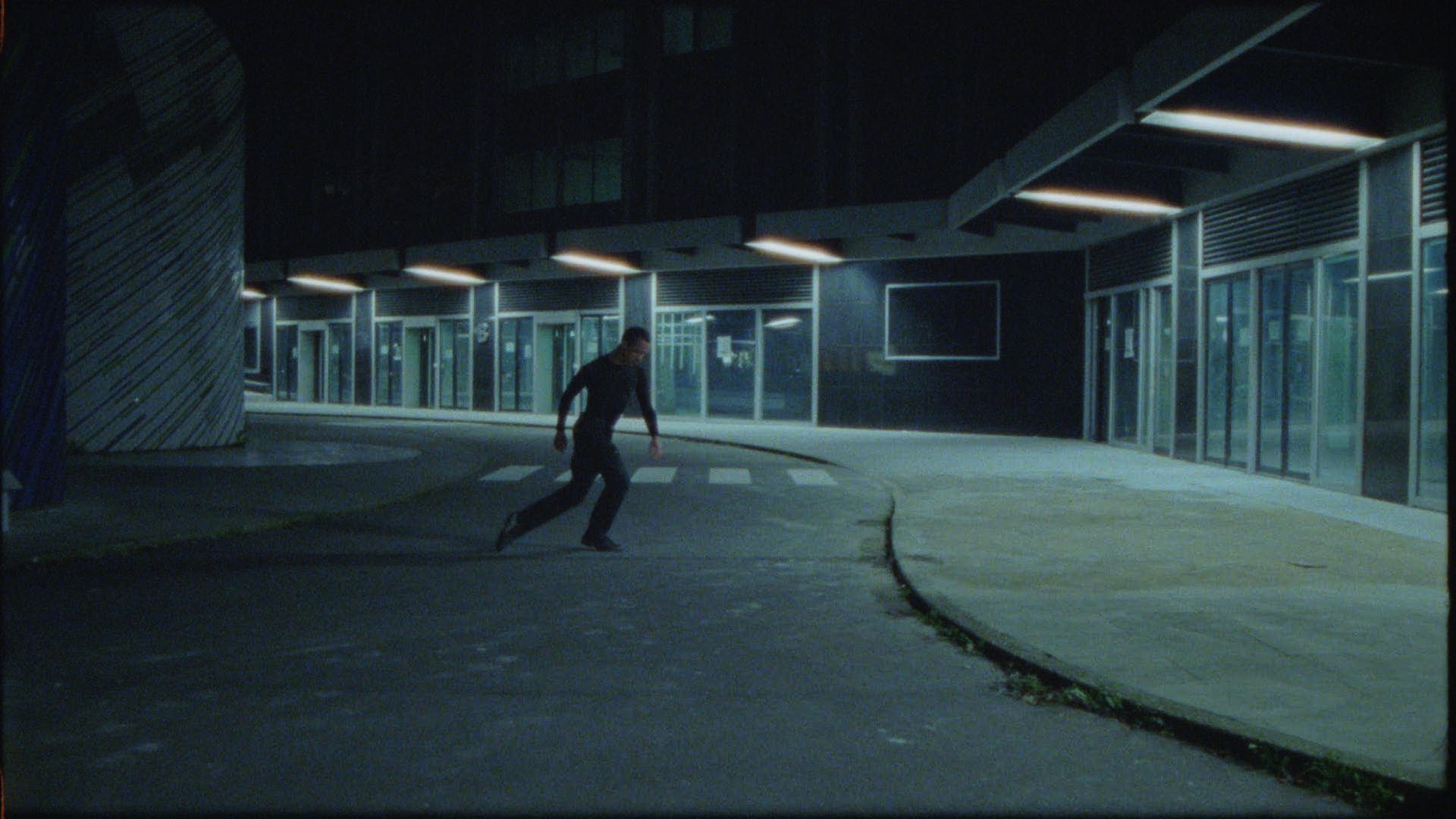
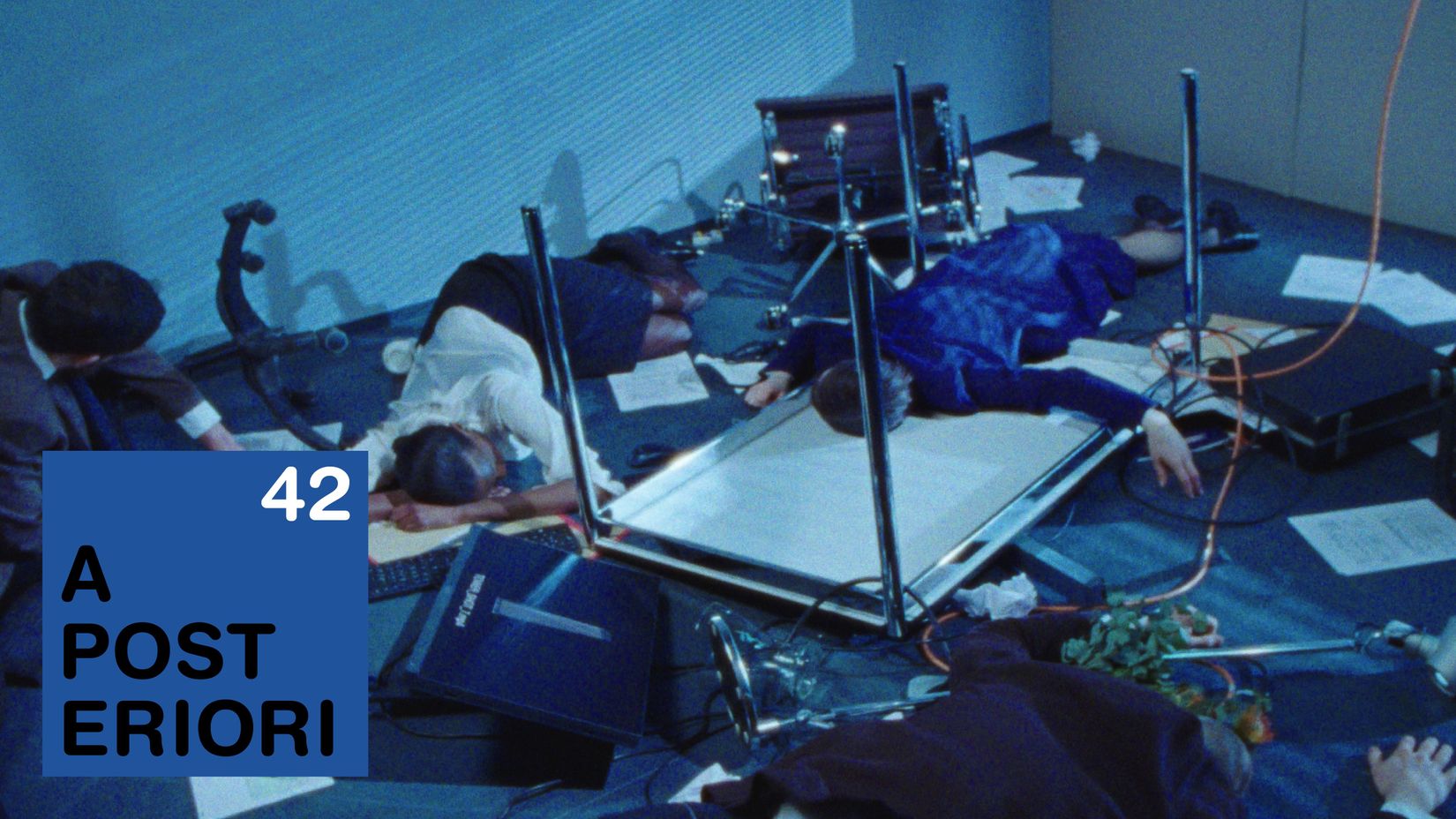
The mythologies devised by Noujaïm reveal tragic figures who resist, falter, disappear and occasionally dance, searching for ways to outlive the forces they cannot contend with. Through Azedine, the memory of a nightclub, a site of celebration and socialization for Arab communities in an underground level of La Défense in the 1980s, resurfaces. Later on, the actor Kayije Kagame grapples with a corporate hellscape in which the pressures of performance and surveillance end up contaminating even her perception of reality. The glass walls and conference rooms morph into mental architectures. Lastly, the figure of Denis Lavant, at once heroic and exhausted, is an avatar of the very last worker sacrificed on the altar of progress, capital and profit.
Around these figures, skyscrapers digitally collapse, disintegrate or explode thanks to CGI. In the years since September 11, 2001, images of falling objects and people have activated a collective memory in which disaster, fear and a reshaping of political imaginaries are intertwined. Today, as a genocide is documented in real time, images of killings and their relentless spread across screens continue to fundamentally alter our relationship to violence and destruction, leaving us somewhere between fascination, numb disbelief and helplessness. Noujaïm’s trilogy employs a plurality of image formats: animation, surveillance cameras, 16mm film and phone captures. Embracing this coexistence, he has refined a cinematic grammar closely attuned to the complexities of our contemporary visual culture. This permeability of forms reveals a way of thinking about the world and the violence inhabiting it–an attempt to understand how these images respond to and contaminate one another, even as they shape our perceptions of events. To scrutinize the performativity of the world of work, institutionalized violence, and the growing prevalence of surveillance capitalism, fantasy is just as important as are reported facts.
In the exhibition space, falling is not a past event, but a permanent state. The films play amid scenery that calls to mind disordered corporate spaces, or perhaps a ruined amphitheatre. A window in a conference room frames our view of the most purely documentary instalment of the trilogy, leading us to observe Azedine’s backward gaze. Elsewhere, a monitor narrows our field of view to the point of claustrophobia, matching the protagonist’s growing anxiety as she is suffocated by the dictates of the business world. For the final film, fragmented tiers of seats form promontories, recesses and pockets of shadow, multiplying the viewpoints from which to consider these contemporary mythologies of disorder. The overall arrangement creates a tipping point frozen in time, punctuated by Noujaïm’s moving images surveying the beating heart of La Défense, of those who built it, those who exhausted themselves in it, were swallowed up within it, yet continue to live there.
In the shadow of the Grande Arche, with its impeccable geometry, two lovers kiss on a bench. The scene introduces the possibility of affection in an environment built for performance and profit: for a few moments, the space no longer belongs to the corporations occupying it. An indignant question from an earlier film of Noujaïm’s, Daughters of Destiny (2021), still echoes:
“They get the world. . . and we take what? Basements?”
Between daytime productivity and nocturnal marginality, La Défense becomes the site where the failures of the present materialize. Bodies plummet from windows. The last monuments still standing are threatened with imminent collapse. Death is reflected in the glass panes.