Lynda Gaudreau
Romances
2026.04.24 – 06.20
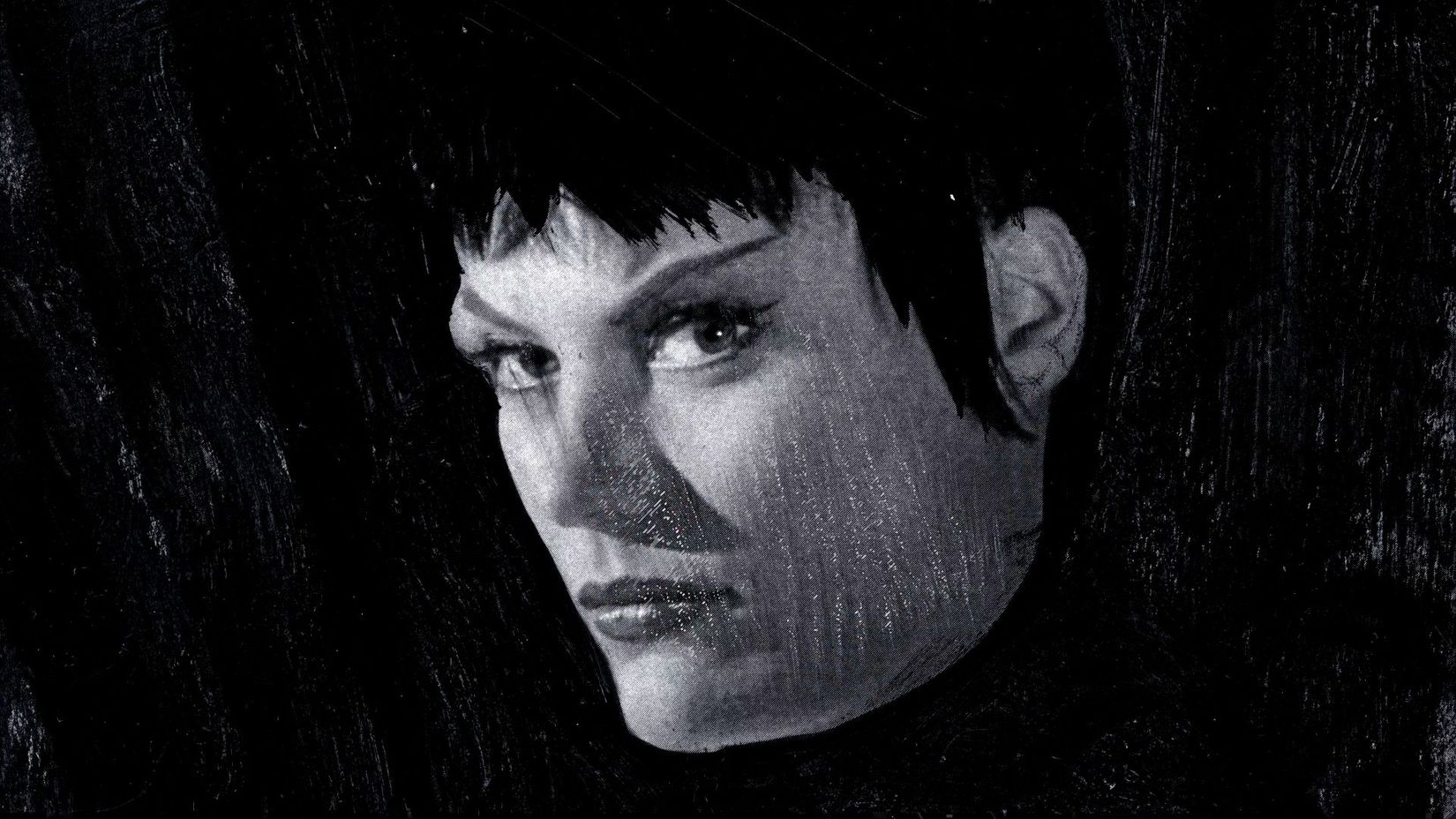
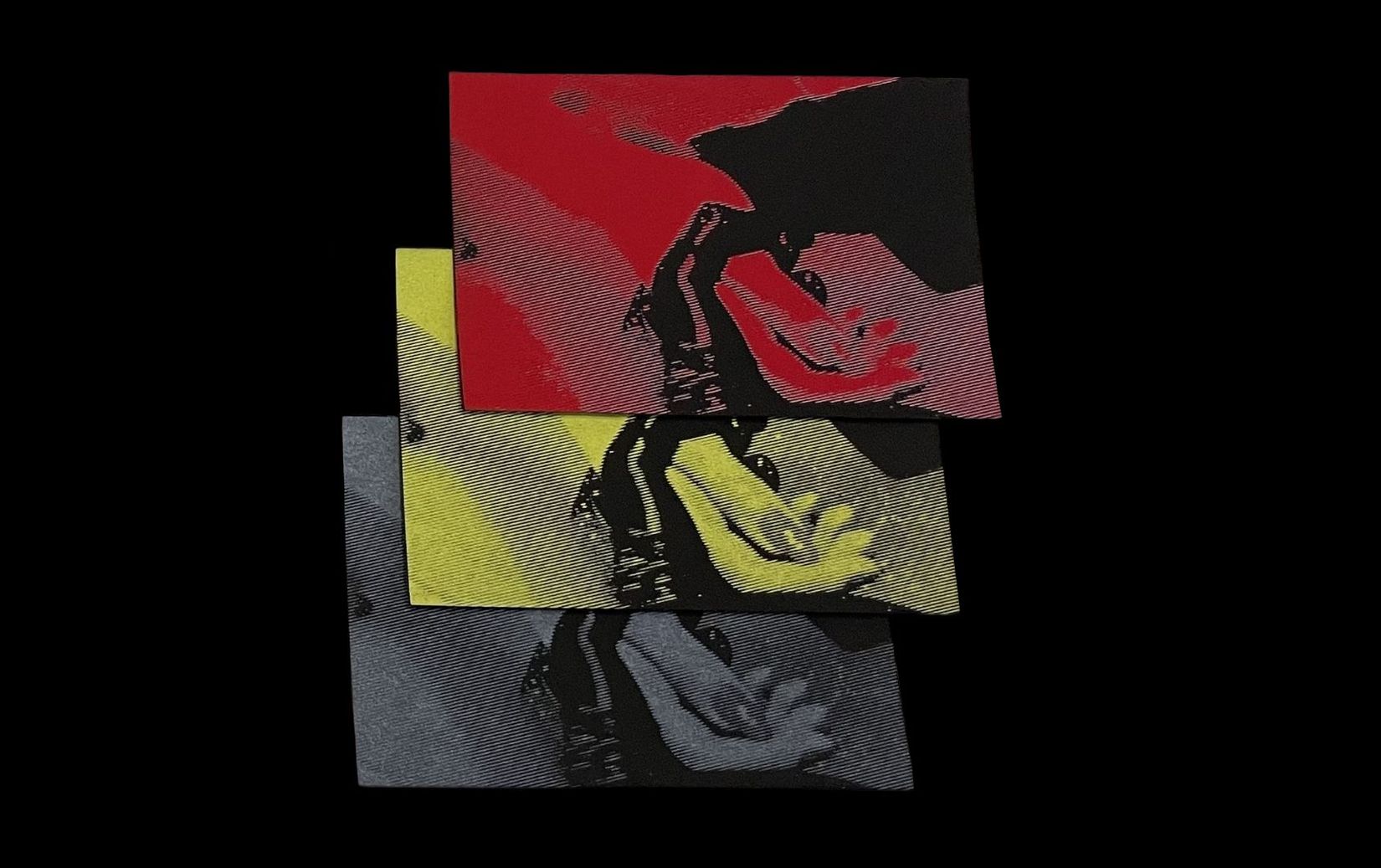
This new installation by Lynda Gaudreau, presented as part of the research cycle What Exhibition Does to Books, explores the photonovel as both narrative and conceptual material. The popular format built on sequences of still images accompanied by dialogue is here dissected and reorganized into a staging device that upends the genre’s tropes. Texts, sounds, and images tumble out of sync, transforming the narrative into an exhibition mode emphasizing ruptures, ellipses, and dramatic suspensions.
The storyline, inspired by the aesthetics of Italian giallo cinema, proceeds through a series of crimes in which the victims’ eyes are mutilated. This motif references the drive and desire to see that is integral to cinema and visual culture. In both the giallo and photonovel genres, that impulse is often inscribed in a voyeuristic, gendered economics that transforms female bodies into a spectacle of violence and desire. The narrative thus exposes the impulse metaphorically, while prompting the audience to think about its role; the act of seeing becomes uncertain, fragmented, constantly questioned.
JAN BAETENS
The death of the photonovel has been hoped for and foretold ever since the genre’s beginnings in 1947. It was seen as the epitome of popular melodrama and sentimentality, an ugly duckling derided as “comics but with photos” or “movies for the poor.” But the photonovel has also shown remarkable resilience since those beginnings, countering attacks from some quarters and indifference from others by expanding thematically and formally, venturing into such unexpected spheres as political reportage, biographical narrative, and queer fiction. It has evolved from magazine to book form, entered art gallery spaces, been projected on screens, and even “gone from silent to talkie” on our smartphones.
Lynda Gaudreau’s interest in the photonovel is part of that history, but transcends it in multiple ways. Romances is a milestone in the evolution of the genre, to be sure, but instead of merely redefining the photonovel, the artist has genuinely reshaped it, intervening radically in the body of the genre and its place in social and artistic discourse.
First of all, Gaudreau problematizes the apparent simplicity of the photonovel’s basic components: words and images. Words can be read and understood, of course, but with Romances she ensures they are also seen and heard. Since they are, in and of themselves, easy to read and hear (and when they are not, they are explained in the work), Gaudreau is able to act on their visual and aural materiality, which ceases to be purely decorative. The form no longer underscores the meaning; it competes with it.
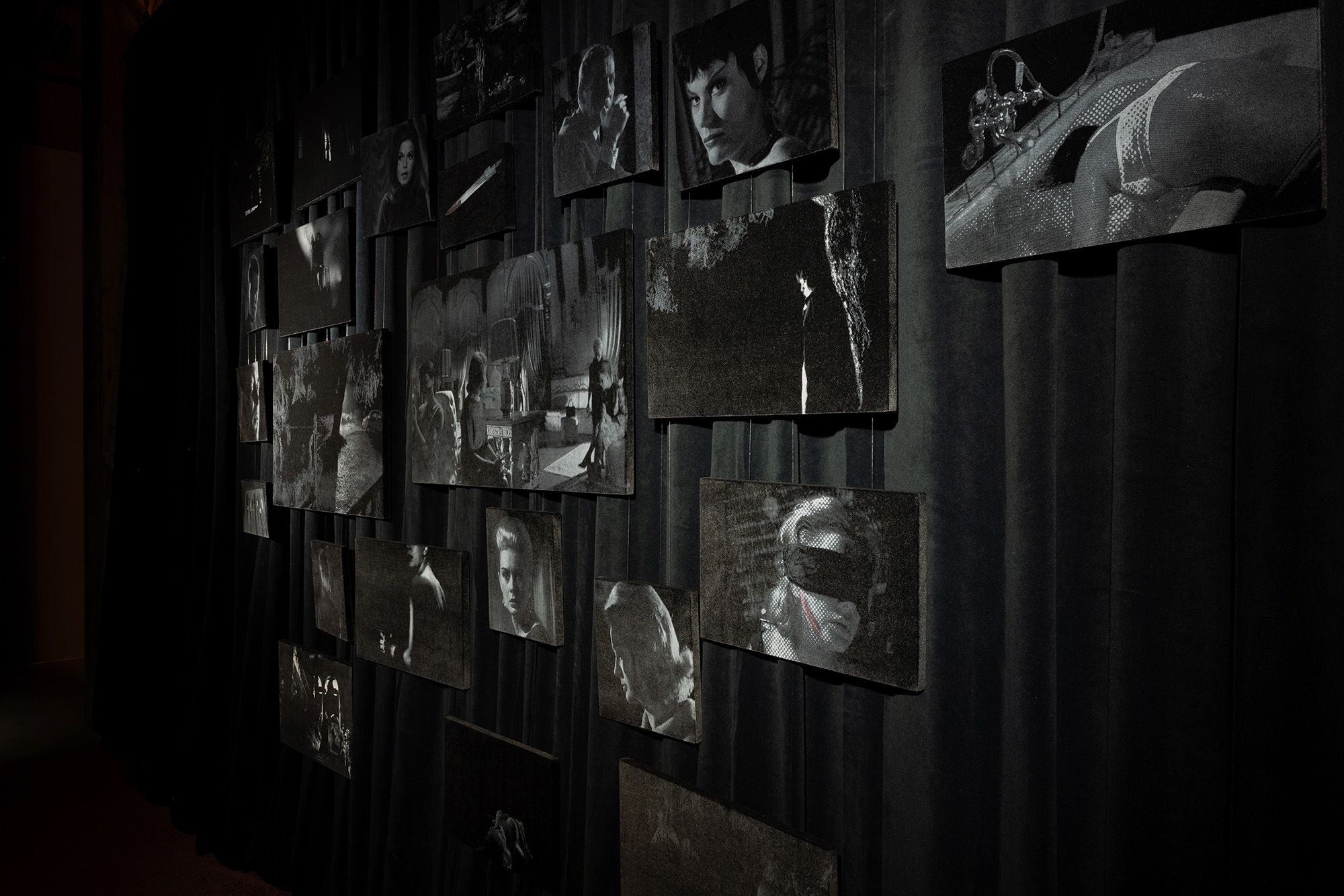
Romances also situates the photonovel within the wider universe of the popular press and fiction, and their media constructions. The photonovel is intermedial by nature: a “talking” genre, in which all of the images are accompanied by speech balloons or captions. The artist magnifies that junction, but adds a crucial dimension, that of transmediality, linking the photonovel to other media such as the tabloid press, that modern—i.e., mercantile and marketable—expansion of the timeless “fait divers” news item, which here bleeds over from the newsstand onto the sidewalk, where the photonovel finds its audience. The intentional sheen and pseudo-clutter of the newsstand are a synthesis constructed out of the impossible separation, and no less impossible suturing, of that which pertains to the word and the thing, to reality and the means by which we make it into another reality that has the same directness and agency. Romances steeps photonovel melodrama in the grimier sea of tabloid news, and shows that this encounter is by no means artificial. If melodrama is unmasked as a saccharine caricature of the gender war, the same applies to tabloid crime stories—in reverse, of course. Neither one emerges unscathed from this confrontation, in the quasi-judicial sense of the term. The hackneyed scenarios of tabloid crime stories are on trial, and the photonovel is called as a witness. At the same time, tabloid crime stories indict the photonovel. Before long, though, this framework no longer suffices to describe the play of multiple references for which Romances serves as both vessel and launching pad. They range from the Italian gore cinema of Mario Bava and Dario Argento to found (who knows where) images to the scenarios triggered by gossip and other exchanges that make up far more than just our everyday. These references are potently summed up by the screen prints hanging from a curtain that acts as a courtroom evidence board, already contaminated by other signs and media. Here too, we see, we hear, we touch (even if only with our eyes, but this wounds the eyes, which do more than just see; then comes the shock as our gaze encounters the motif of eye-gouging, which the artist has treated in diverse ways), we smell, and we feel (and few installations make us feel our own body as keenly as Romances does).
This clash of forms and meanings, and the intermingling as the two extremes of the popular press come in contact, could have resulted in a sort of imbroglio—a mushy soup, if you will. What happens in Romances is the exact opposite. Gaudreau’s work is crafted with a watchmaker’s attention to detail, and the refocusing on the theme of investigation, recasting the sordid crime into a before and an after, presages its integration into a deliciously paradoxical apparatus.
On the one hand, the presentation of Romances at VOX takes the complexification of signs a step further. Here, words—and the embedded actions of reading, seeing, understanding, and hearing—become sculptural forms, objects with volume that move through time as well as space. These new signs engage our bodies as visitors. Mentally, we continue to turn the pages, listen to the radio, and touch screens, but now we are also moving in front of, and even more literally, between and through these different media. The transparency of the act of reading recedes, but this makes the reading all the more effective.
On the other hand, the visitor experience, in a further manifestation of the artist’s paradoxical approach, breaks with the conventional notions of immersivity, which blurs and dissolves the differences within the gamut of signs and sensations in favour of an overall transport that is raw or, in all honesty, passive. With Romances, absorption becomes active searching, differentiated, and also situated in time: we get lost, but we find ourselves better acquainted with the forms and problems of an apparatus designed, yes, to confuse us, but also—with the help of time and space—to prompt the detachment needed to begin to understand.
The decisive instrument in this strategy is what the artist calls “asynchrony”: the panoply of dissociations—sometimes minuscule, sometimes harsher—that create a void between elements we thought were firmly fused, and whose obstinate singularity re-emerges thanks to these collisions. Asynchrony, then, is anything but destruction: it is a new technique of construction—not so much sound as resonance; not so much form, in the end, as reverberation.
The title Romances is in the plural, and the sinuous, serpentine, insinuative letter at its end is also the entire program of the installation: from “romance” to “romances,” the shift is not from singular to plural, from the one to its repetition, but from sameness to a sameness that is also otherness. It is, somehow, the impossible coincidence of sameness with itself. Lynda Gaudreau’s Romances illustrates this all the more eloquently in that our journey through the installation also culminates in a metamorphosis, whereby what we thought we knew is another turn of the spiral.