Michaëlle Sergile
And Then, Perhaps, a Memory
2026.01.16 – 03.28
The impetus for this new project by Michaëlle Sergile was provided by the stories of three Haitian women–journalist Michèle Montas, writer Marie-Célie Agnant and Marie Wilnie Brézault, the artist’s mother–who immigrated to Québec and New York at different times. Though the reasons for their journeys differed–exile, constraint, the desire to pass on knowledge–these women carry with them the histories of these places.
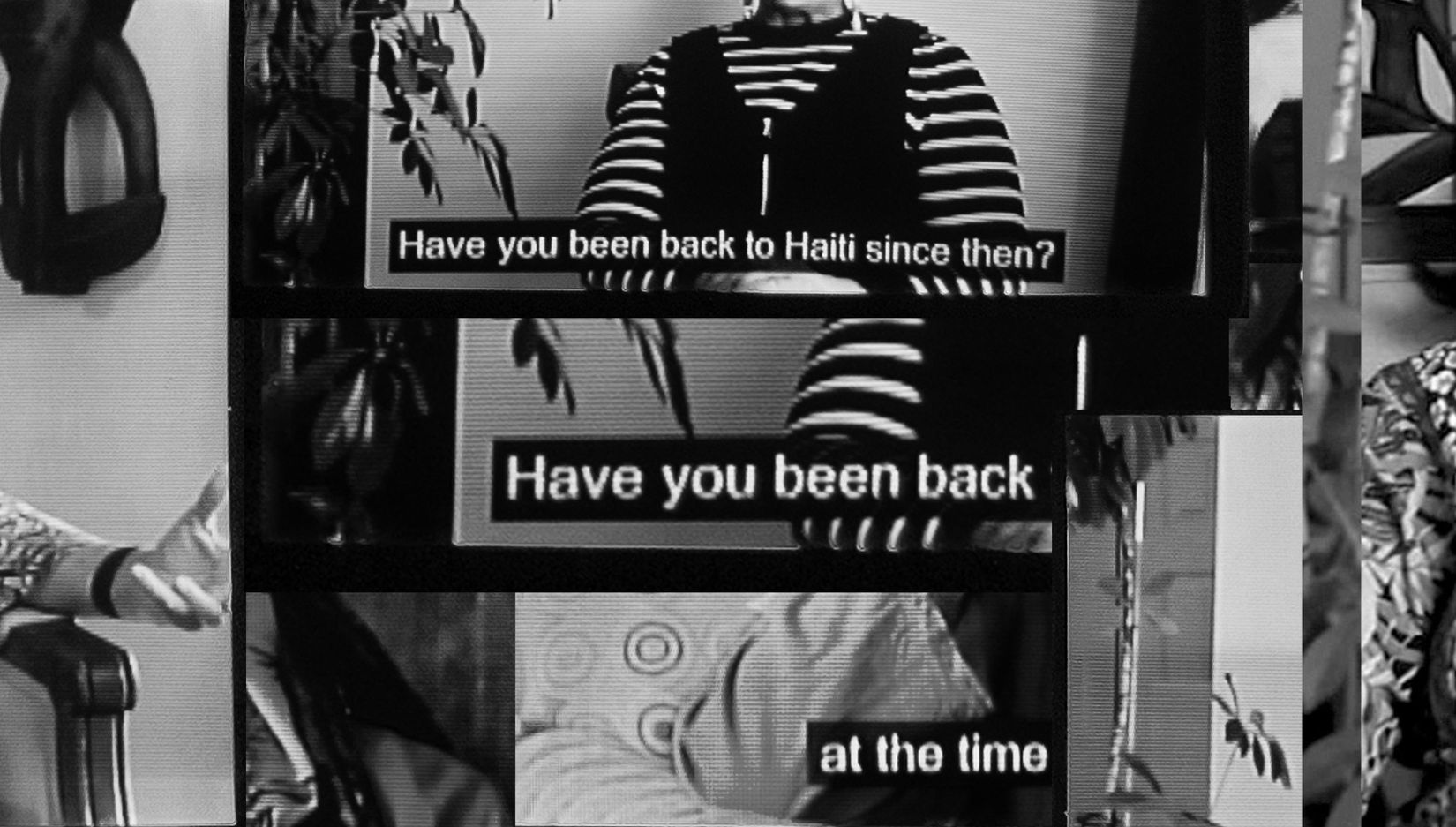
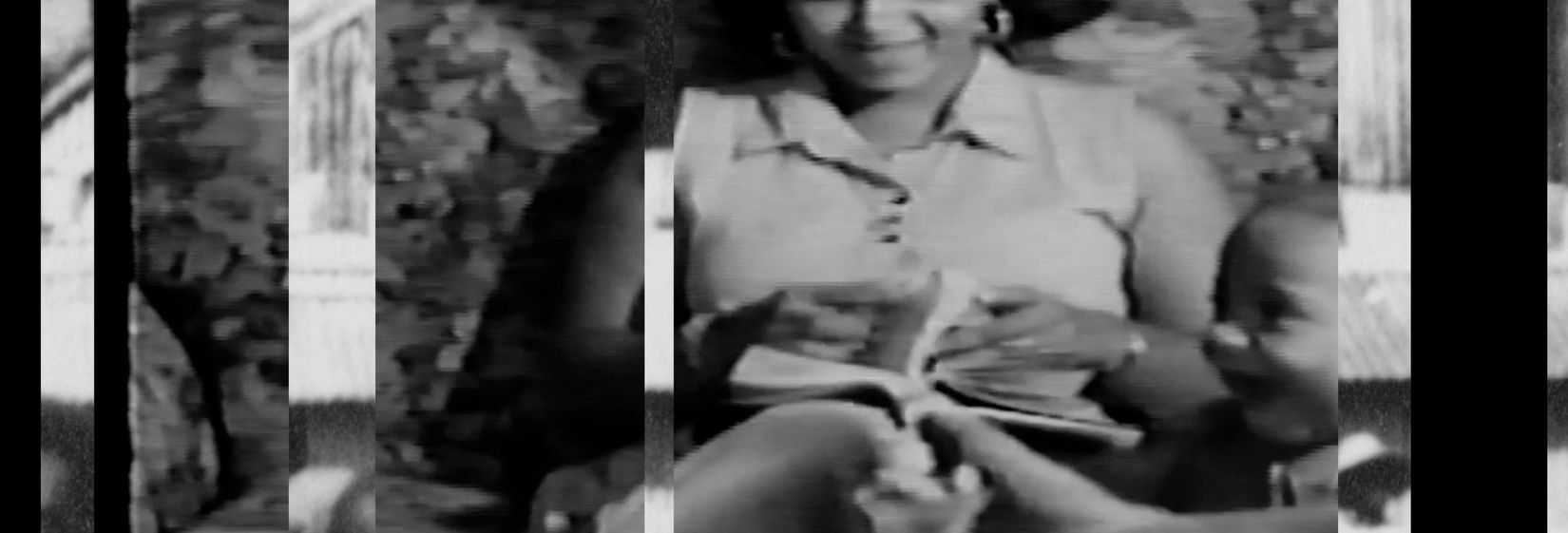
In these outsized installations that combine video, weaving, sound and sculpture, the artist offers a reflection on bereavement in which glitches–digital distortions in sounds and visual images–function as a language, blurring time. Here, geographical, architectural and visual fragmentation opens up spaces in which political, intimate and familial memories intertwine and disrupt linear readings of history.
JOSÉPHINE DENIS
Michaëlle Sergile’s new body of work, And Then, Perhaps, a Memory, unfolds like a topography. The works reflect on Haiti’s recent history from exile, turning form and material into a place from which to speak. The exhibition becomes a dramaturgical site that gestures toward a much-needed apex for a country whose wounded body remains in continual upheaval.
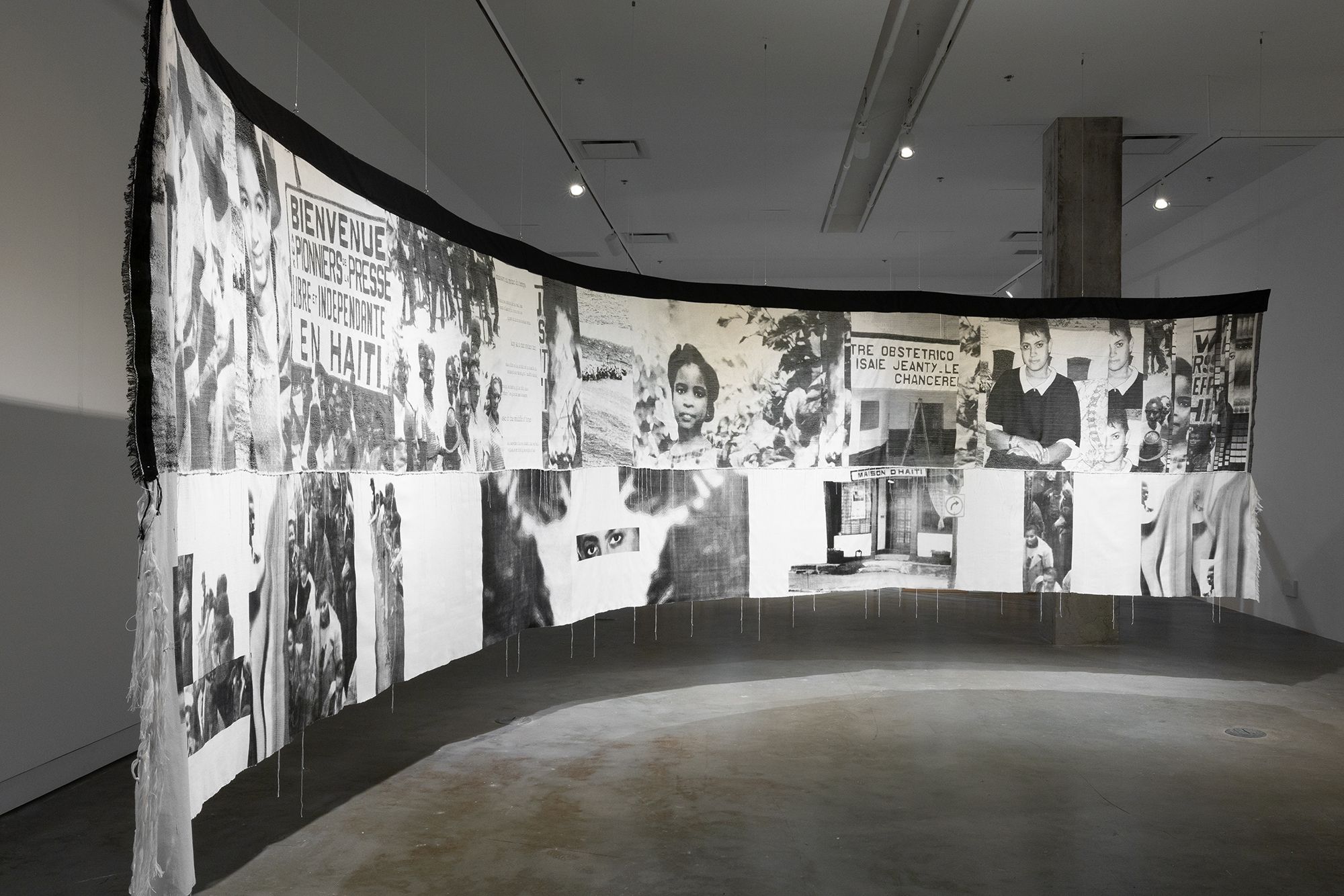
In Haiti, lives, homes, institutions and monuments burn to ash under the weight of violence and crime, fragile sites of grounding and resolve. With them, archives falter and vanish. With urgency, Michaëlle Sergile returns to the act of building. She designs wooden structures that echo architectural forms from both Haiti and Québec: frames that welcome her textiles, as if opening doors into a provisional home for memory. At the centre of the exhibition, an expansive weaving unfurls in a curve and invites a layered reading: from a distance, a collage sketches an affective cartography; up close, fragments of images and text scroll across the recomposed fabric, tracing lives shared and torn between two places. Where archives burn and monuments crumble, she invents other spaces of recording made of thread, gesture, image and sound. Sometimes they are crossed by ruptures and overlays, like a glitch that recalls the fractures of our half-island, turned inward on itself, a prison without walls.
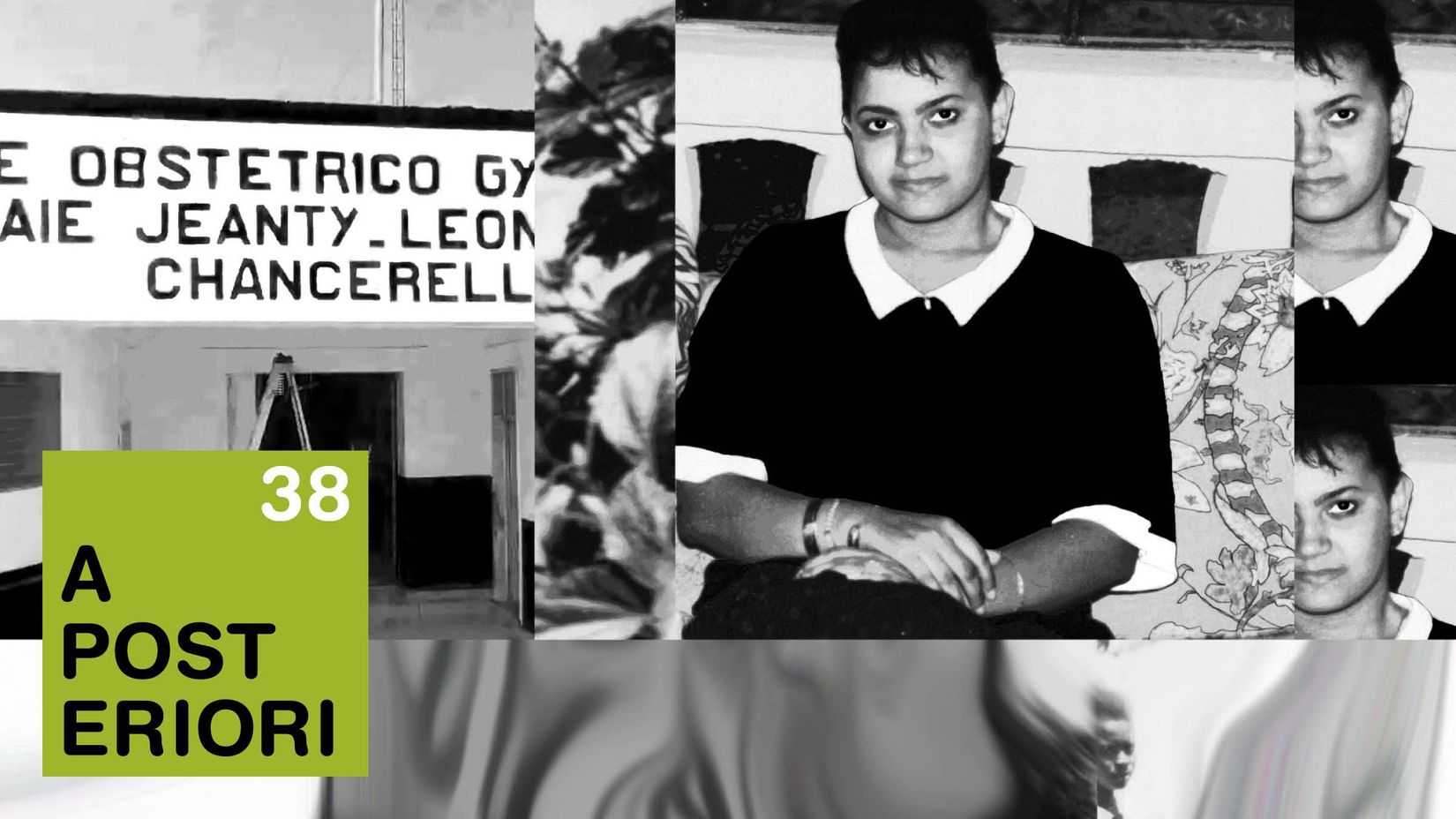
Her work also runs up against another fire, quieter but no less devastating: the lack of documentation on the women who nourish Haiti’s literary and cultural fields. Too often, their militant contributions leave so few traces in official archives, even as their voices and declarations give shape to the country’s feminist movements. Sociologist and activist Danièle Magloire, co-founder of Kay Fanm1, insists we must preserve the force of Haitian women’s civic engagement—the shared repertoire of practices through which collective life in Haiti is made and remade. Michaëlle Sergile answers this call through her approach: she turns artistic gesture into a tool of inscription and symbolic repair, shaping a living, sensitive archive where image, matter and sound step in as institutions collapse.
This undertaking brings forward three women, Michèle Montas, Marie-Célie Agnant and Marie Wilnie Brézault. Each traces her own trajectory, offering reference points that recall the continuing need for liberatory movements. In And Then, Perhaps, a Memory, a video installation on cathode-ray televisions composes a shared experience of exile, loss and transmission from their respective accounts. Journalists, writers, women of many crossings, they sustain and transmit, through their work and everyday gestures, the presence of those who walked, spoke, wrote and acted before them. Within them live decisive questions, ways of thinking that bring the clamour of current events into focus. The artist’s work conveys Haitian cultural aesthetics to us, those of us living in exile, scattered yet still connected, across images, materials and narratives; across gathered fragments of archives; across voices, street currents and market calls that shake borders loose.
For us, these past years have been an unbroken sequence of devastation. The impossibility of reaching the country has settled into a stubborn melancholy that resists articulation, difficult to convey to anyone who has not lived it. It is not only nostalgia for a territory, but an imprinted panic at the irretrievable loss of voices, knowledge and living archives. In the final room, a video and sound work draws on archives from Haiti and Québec. Through a glitched register, it sets images and soundscapes into dialogue around public gathering and collective action. Mobilizations and gestures of resistance rise like a counter-song to the unrelenting corruption, violence and despotism that prevent the country’s upheavals from ever settling. This work brings us back to what feels distant in exile, yet demands to be kept close in our daily reckoning: people, spirits and situated knowledge; histories, villages, dwellings; bodies of paper, fabrics and books; voices that still resound, holding open the architecture of sovereignty. It is a steady glance into the fire, an attempt to save from its flames what must not disappear, where, perhaps, a memory persists.
The artist wishes to thank Marie-Célie Agnant, Michèle Montas and Marie Wilnie Brézault as well as David Bontemps, Joséphine Denis, Paul Toussaint, Kadidia Traoré and Miguel Sergile. She further acknowledges the contributions of Dominique Desbiens at Atelier Circulaire, Gregory Prescott and Natacha Chamko at Atelier Clark, the Centre des textiles contemporains de Montréal, the Centre international de documentation et d’information haïtienne, caribéenne et afro-canadienne (CIDIHCA) and the support of the Conseil des arts et des lettres du Québec (CALQ).